Kitchens, bathrooms, laundry rooms, mudrooms and basements all deal with water sooner or later. We install waterproof LVP and tile that handle spills, humidity and busy households.
Waterproof luxury vinyl plank has a core that does not absorb water, so spills and humidity will not swell or warp the planks. Porcelain and ceramic tile are waterproof by nature. Traditional laminate and hardwood are not, which is why they are poor choices in wet rooms.
Waterproof LVP is warmer and quieter underfoot, installs faster and works well over many subfloors. Tile is extremely durable and handles standing water, but it is hard and cool and needs a very flat, solid base. We can go through both for each room in your home and explain the trade-offs.
A waterproof floor protects itself, not the subfloor beneath it. Water that gets under the planks through gaps or edges can still cause problems, so spills and leaks should be cleaned up promptly and the source of any leak fixed. Waterproof flooring is not a substitute for repairing a plumbing or drainage problem.
We serve Putnam, Hendricks and Owen counties.
Waterproof LVP in a basement rec room.
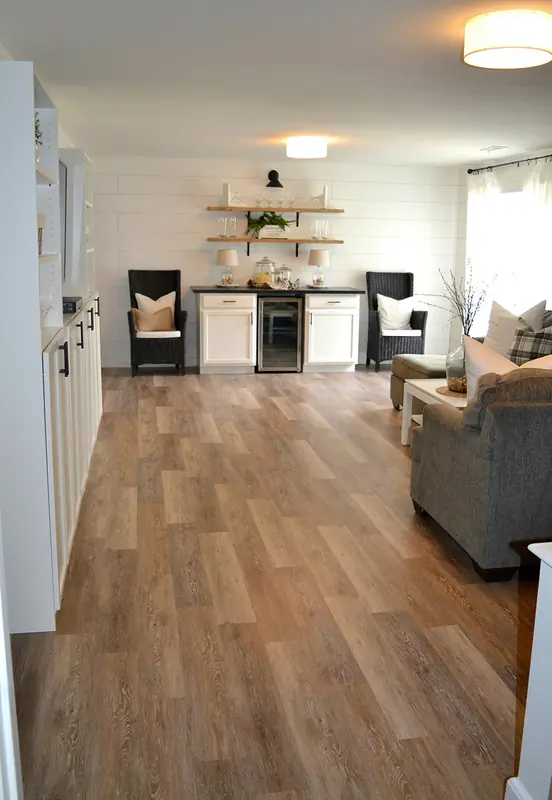
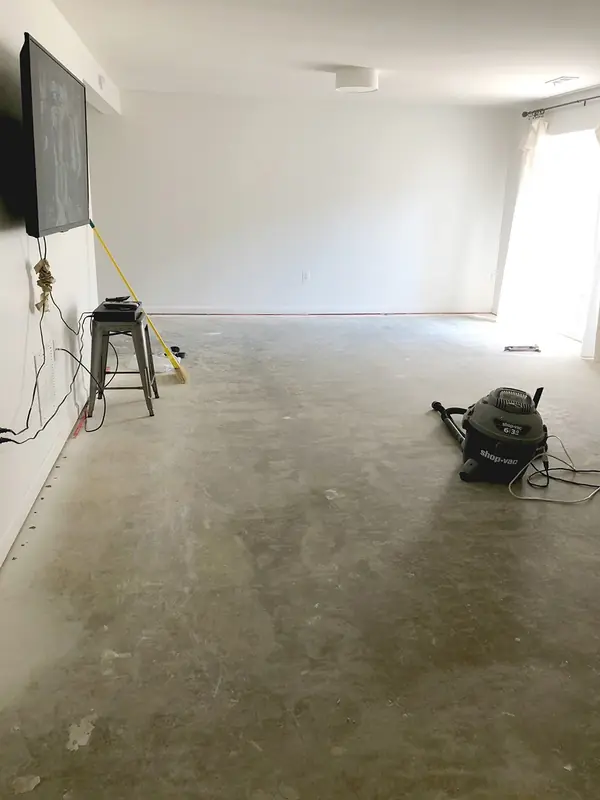 BeforeAfter
Most quality LVP has a waterproof core, so the planks themselves will not swell from water. Water can still reach the subfloor at edges and openings, so clean up spills and fix leaks promptly.
Both work. Tile is very durable and handles standing water, while LVP is softer and warmer underfoot. We can talk through what suits your bathroom.
Yes. Waterproof LVP is a popular choice over concrete slabs, after we check the slab for flatness and moisture and prepare it.
Traditional laminate is not. Some newer laminates are water-resistant, but for wet rooms we usually suggest waterproof LVP or tile.
LVP and laminate can look alike but behave very differently. Compare water resistance, durability, feel and best rooms before you choose.
Read the guide →Basements are the toughest room for flooring because of moisture. Compare LVP, tile, engineered hardwood and carpet, and what to check first.
Read the guide →Kitchens are hard on floors. Compare LVP, tile, laminate and hardwood for spills, dropped dishes, appliances and daily foot traffic.
Read the guide →