A finished basement needs a floor that can handle moisture, cool concrete and heavy use. We install waterproof LVP and tile over concrete slabs, and we check the slab before we recommend anything.
Basements sit below ground, which means concrete that stays cool and can carry moisture up through the slab. Humidity runs higher too, especially through Indiana summers. A floor that works well in a living room can fail in a basement, which is why we start with the conditions, not the color.
We do not recommend solid hardwood below ground, since it reacts to moisture and humidity.
If you are finishing a basement, tell us about your schedule and the other trades on the job. We can plan around drywall, paint and trim so the floor goes in at the right time. If you are not sure how dry your basement is, say so when you request your estimate and we will look at it before we recommend a floor.
We serve Putnam, Hendricks and Owen counties.
A basement rec room: carpet out, waterproof LVP in.
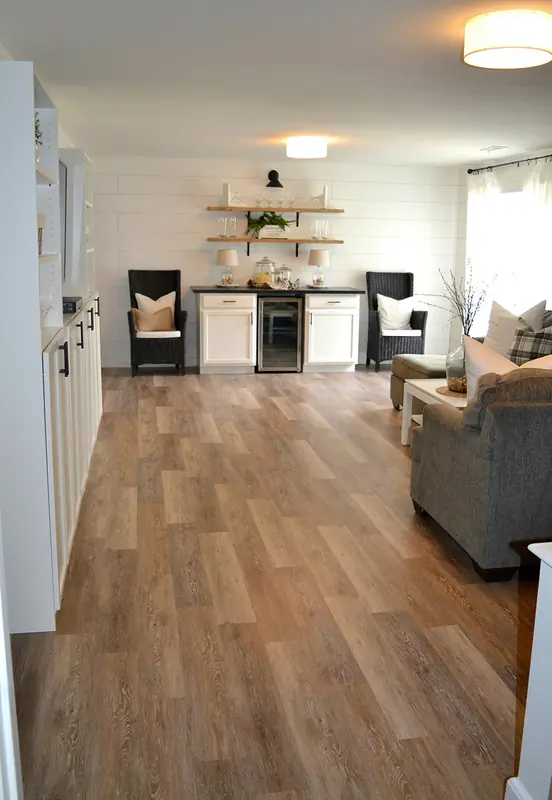
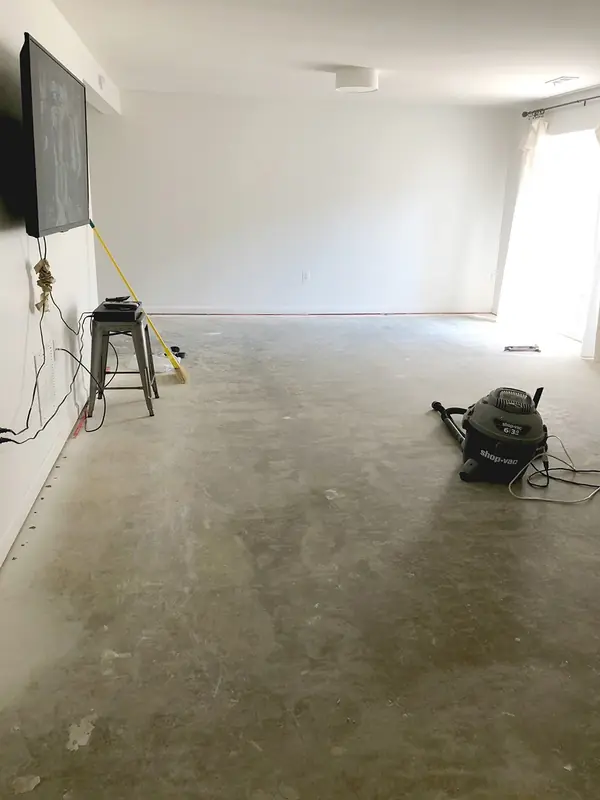 BeforeAfter
For most finished basements, waterproof luxury vinyl plank is the best all-around choice, with porcelain or ceramic tile as a good option for bathrooms and utility areas.
Yes. We clean, patch and level the slab as needed and use the underlayment the manufacturer calls for. Moisture is the main thing we check first.
Only if the basement stays dry, and with a moisture-resistant pad. In a basement with any history of moisture, waterproof LVP is the safer choice.
It depends on the size of the space, the prep the slab needs and the floor you choose. Many projects take one to a few days. We give you a specific timeline with your estimate.
Basements are the toughest room for flooring because of moisture. Compare LVP, tile, engineered hardwood and carpet, and what to check first.
Read the guide →Luxury vinyl plank can go over concrete slabs, but moisture, flatness and prep decide whether it lasts. Here is what installers check first.
Read the guide →Scratches, spills and accidents are part of life with pets and kids. Compare LVP, laminate, carpet, hardwood and tile for busy households.
Read the guide →